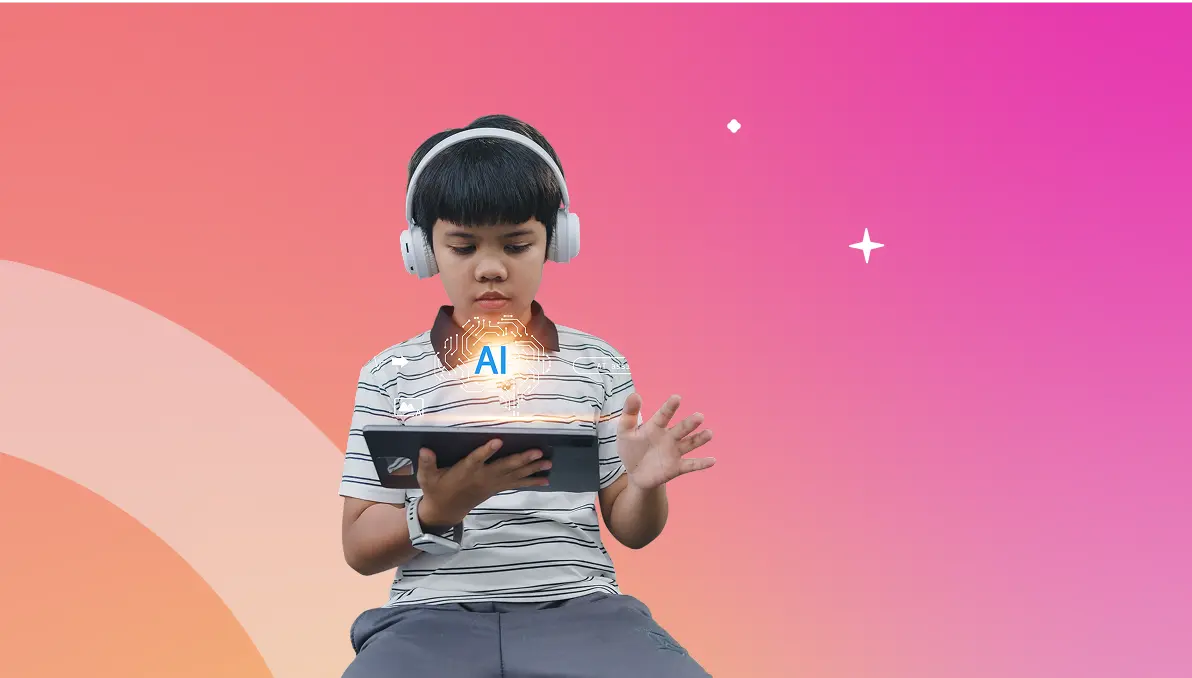
Artificial intelligence (AI) is beginning to transform the way students learn around the world. The AI revolution is now reaching the classroom, modernizing the education system as academic institutions consider turning to AI to support teachers and deliver for students.
But what does this mean for students? From research and ideation to personalized feedback, we will explore key ways students are starting to learn with AI. As these innovative approaches are reshaping education, parents and guardians must understand the role AI could play in their children’s development.
Are Teachers and Students Allowed to Use AI?
AI in education is here to stay, with both teachers and students using it regularly. Teachers are beginning to lean on AI to help with lesson planning, creating resources, providing feedback, and performing laborious administrative tasks. Teachers must follow their school’s AI and data policy, and use their professional judgment to determine whether AI use is beneficial and ensure that everything generated by AI tools is accurate. At all times, teachers are obliged to follow the rules governing AI use set by their academic institutions, as well as legal requirements on data protection and child safety.
For students, it gets more complex. While AI use can absolutely be allowed and may sometimes necessary, it’s vital that the right safeguards are put in place. It’s up to each school to decide whether to allow students to use AI and, if so, how. Ensuring that AI tools have a positive impact on learning and that parents and staff are engaged in these decisions is critical.
Are Teachers and Students Allowed to Use AI?
We aim to demystify AI in education and empower parents to engage in constructive conversations with their children and schools. To do this, you need to be aware of how students could learn with AI and the tools making it possible.
- Personalized Learning: AI-driven systems may adapt content to an individual student’s pace and learning ability. This includes tailored exercises to address specific knowledge gaps.
- Tailored, Immediate Feedback: Students could receive near-instant feedback and explanations inside and outside of class hours.
- Additional Tutoring: AI can be used to produce data on who needs extra support. This could be especially helpful for students with specific needs or accessibility requirements.
- Idea Generation: AI is a powerful tool in sparking creativity. It could be used to brainstorm and generate ideas, encouraging students to refine them and produce their own improved version.
- Research Support: Supportive tools may help to summarize texts, flag relevant resources, and translate documents. It could be used to gain a deeper understanding of a complex topic.
- Assessment and Analytics: Student progress may be monitored with analytical tools, enabling accurate, data-informed decision-making. This data will then show how students are performing, which is valuable for both teachers and pupils and facilitates personalized learning.
Schools that successfully introduce AI will need to rely on an ecosystem of seamlessly connected AI tools to streamline school operations and enhance learning. If you wish to learn more about how your children’s school might use AI, we recommend checking their student handbook or the school website.
What Are the Benefits of Students Learning with AI?
If implemented correctly, the approaches we have discussed here could reshape education, making learning more interactive, inclusive, and engaging than ever before.
Here are some of the potential main benefits:
- Individualized Learning: Students could move at their own speed and get the right support. Rather than getting lost in a classroom, they can feel that their learning pathway is tailored to their needs.
- Instant Feedback: Relevant, timely feedback would ensure there is no wasted time spent waiting for teachers to mark work and provide explanations. This means they can act quickly and make improvements.
- More Time for Student-Teacher Interaction: Routine teaching tasks could be automated, freeing up more time for face-to-face teacher-student learning. This can lead to better teacher-student relationships and a stronger focus on discussion and development.
- Reduced Teacher Workload: Automation and other AI-assistance can give teachers more time to focus on what matters most, teaching. Reducing stress and burnout among teachers is also a major positive for students and their education standards.
- Inclusive Learning: AI can support more inclusive education through personalized learning pathways, real-time translations, and accessibility tools. No student should feel left out or think they are receiving a different level of teaching compared to their peers.
- Developing AI Literacy: AI is here to stay, so it’s essential that students understand how it works and the opportunities for positive outcomes. It also teaches them how to judge the credibility of AI outputs.
Are There Any Risks?
As with introducing any new technology in education, there are risks associated with AI. What schools need to avoid is an over-reliance on AI that begins to replace a student’s ability to think and problem-solve independently. Parents also have a role to play in this, ensuring that generative AI chatbots like ChatGPT aren’t misused with homework.
Accuracy is an essential consideration for schools, as it ensures they implement effective, high-standard AI tools and consistently check for quality issues. Teachers also need to be well-equipped to teach with AI, with the proper training to understand how to integrate AI and monitor its use.
Finally, AI tools must be developed to specifically support teachers, not replace the unique and vital role they play in education.
The Importance of Using AI Responsibly
AI should always enhance learning, rather than replace it or cause harm. The success of AI in education depends on its responsible use and having the right tools in place to implement positive change.
While plenty is being done in schools to ensure this, parents can take some steps as well. Here are our five top tips for helping children to use AI ethically and safely at home:
- Understand AI: The good news is that if you’ve read this article, you’re halfway there to achieving this one. If you fully understand the role AI plays in student learning, you’re better informed to make decisions and form opinions about its use.
- Encourage Open Discussion: Create a safe space for your children to talk about AI and how they are using it. Speak to them about honesty, plagiarism, and why they should always critically analyze AI outputs.
- Monitor Usage: Check what AI tools your child is using for studying and completing homework. How much are they using these tools? What are they using them for?
- Promote Balance: Make sure your children understand the importance of blending AI with traditional study methods.
- Engage with Schools: Reach out to your children’s school and have constructive conversations about AI use. You could have a big impact on how it is managed. Ask to see the school’s AI policy for more information.